
Gundagai Historic Railway Bridge
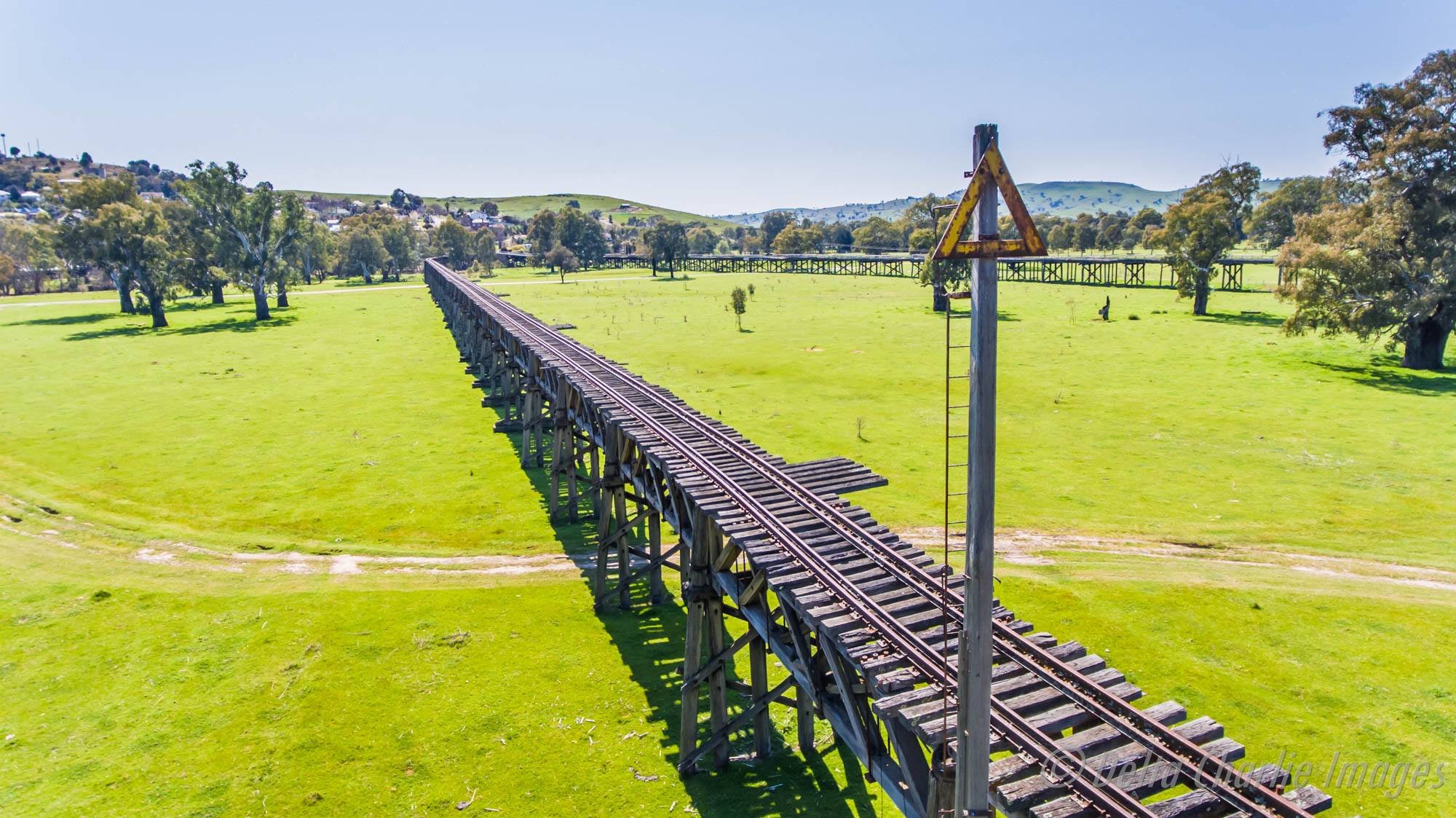
Where: Murrumbidgee Flats, Gundagai
Stretching across the Murrumbidgee River and its broad floodplain, Gundagai’s historic Railway Bridge and timber viaduct are among the town’s most distinctive heritage landmarks.
The railway reached Gundagai in 1886, but extending the line south to Tumut proved a much longer journey. After around 16 years of lobbying and debate, construction of the branch line was finally approved in 1902.
Crossing the Murrumbidgee presented a significant engineering challenge. The resulting structure combined steel spans across the river with an extensive timber viaduct carrying the railway across the floodplain. The main steel span was approximately 312 feet long, while the timber approaches incorporated 77 Howe-type timber undertrusses, each around 35 feet in length.
Construction was also a remarkable feat of manual labour. The railway cutting at the end of the bridge and further earthworks towards Tumut were completed largely by pick and shovel, with a community of railway workers and their families establishing themselves at South Gundagai during construction.
The first train crossed the bridge on 12 October 1903, ahead of the official opening of the railway extension to Tumut. For the next 80 years, the bridge formed part of an important rail connection through the region. The last train crossed on 26 November 1983, when the Gundagai–Tumut railway line closed.
Today, the Railway Bridge and its remarkable timber viaduct remain standing across the Gundagai landscape, providing a tangible link to the town’s railway and engineering history.
The bridge itself is not open for pedestrian access, however visitors can appreciate the structure from surrounding public areas and vantage points across the Murrumbidgee floodplain.
For more information about Gundagai’s railway heritage and historic bridges, visit the Gundagai Visitor Information Centre.